
For thousands, wearing the uniform of the Indian Army isn’t just a career goal-it’s an obsessions, a calling to serve the nation at the ultimate level. It’s a life of absolute honour, grit and prestige that few dare to choose it. that’s the fire burns within you and your dream , means you are in the right place. This definitive guide will break down the exact strategic pathway, uncompromising eligibility benchmarks, and the rigorous selection gauntlet you conquer to join the ranks of the braveness.
In this guide, we will explain how to join the Indian Army, detailing the joinning criteria and the complete selection process.
The Standard of Excellence: Eligibility Benchmarks for joining Indian Army
To lead the charge, you must first meet the Army’s uncompromising standards. only the physically fit and mentally sharp make the cut. check your stats below to see if you have what it takes to join the ranks of the braveness.
According to INDIAN ARMY STANDARDS
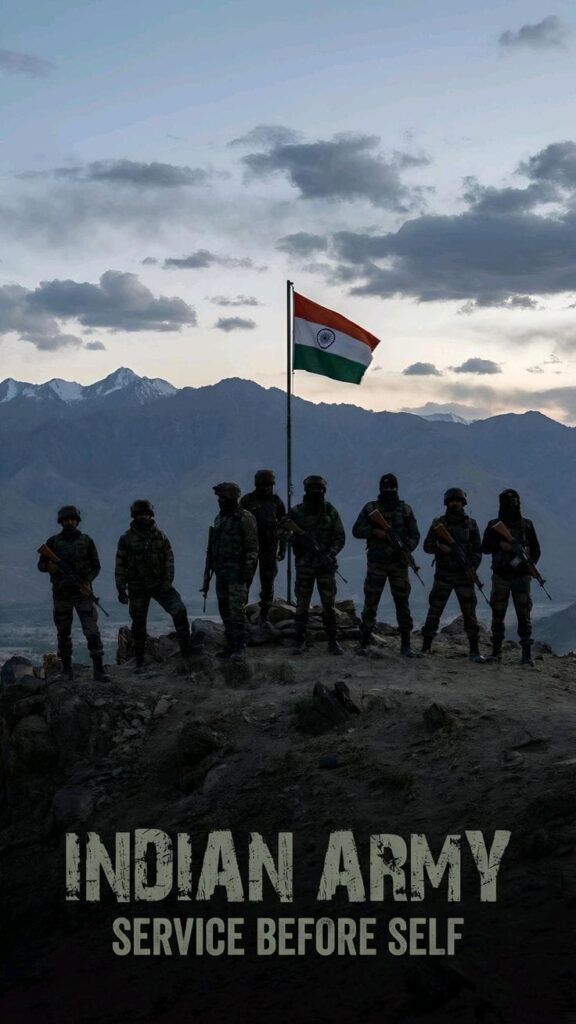
Join Indian Army Eligibility and More
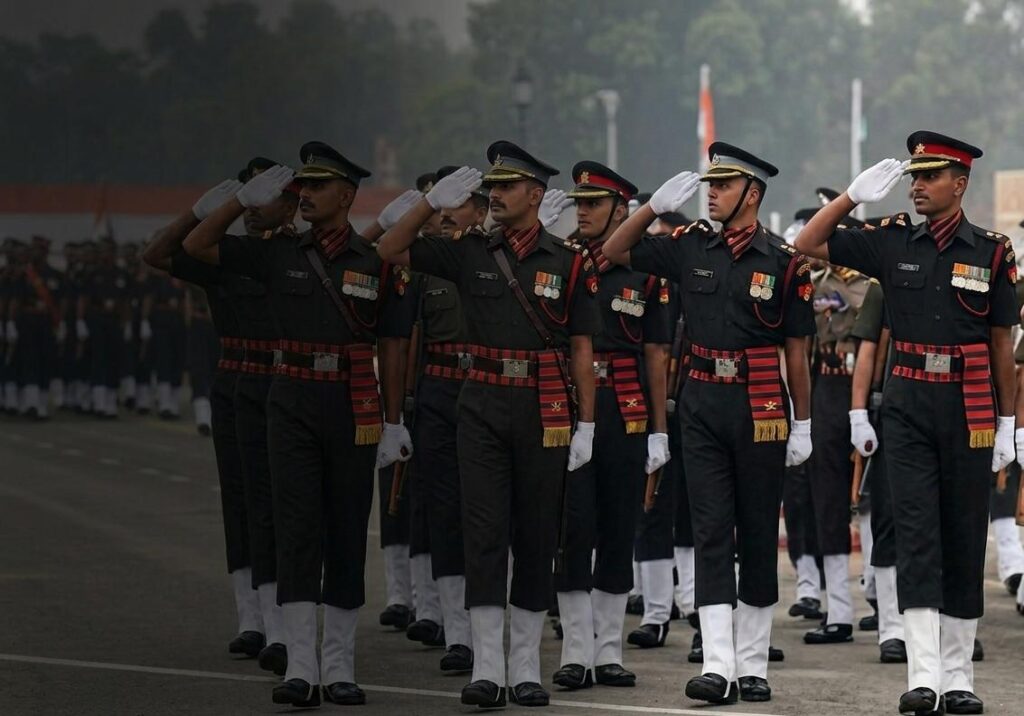
Join Indian Army as a officer
1. The Age Bracket
Your window of opportunity is precise. Ensure your date of birth falls within these mission -critical zones :
- AGNIVEER (All Arms): 17.5 to 21 Years.
- NDA (Officer Entry): 16.5 to 19.5 Years.
- CDS ( Graduate Entry): 19 to 24 Years.
- Technical Entry(TES): 16.5 to 19.5 Years.
2. Physical Stature (Combat Readiness)
THE Army requires a frame built for endurance. While physical standard vary by region,the general baselines are as follows “:
- Height (Male):170cm (General),162-165cm (Hilly/Tribal regions)
- Height(Female-WMP):152cm minimum.
- Chest:77cm +5cm expansion.
- Weight: proportionate to height and age as per the official BMI Medical Chart, minimum weight should be 50 kg.
3. Qualification required
For joining the military forces or Indian army the qualification in a particular subject or class have to be cleared from a recognized university or schools. This is because Indian army also need a well educated and a expertise person in his Field .Consequently, candidates are assigned to different trades based on their specific educational background:
- Agniveer General Duty(GD): Class 10th-grade(matric) certificate with a 45% aggregate and 33% in every subject for this trade.
- Agniveer Technical: applicants must complete 10+2 with (Physics, Chemistry, Maths, and English maintain a 50% minimum aggregate.
- Agniveer Office Assistant/ SKT: 10+2 (Any stream) with 60% aggregate and 50% in each subject.
- Officer Entries(NDA/CDS): 12thpass or Graduation degree from a recognized university.
Entry types
Entries in the Indian Army are categorized through various pathways to filter potential recruits
1. {NDA (National Defence Academy):] This is a direct route for high school pass-outs directly joining the Army based on age limits (16.5-19.5 years) and education (10+2 passed). NDA provides entry into prestigious positions with competitive salaries.
2. {CDS (Combined Defence Services):] Direct entry from college into officer ranks in specific branches. Requires a graduate degree from a recognized university.
3.a:-Under the ‘Agnipath Scheme,’ the Indian Army recruits youth aged 17.5-23 years for four years.The aim is to make the force younger and technologically adept.
b:-The detailed salary package, 4 years service completion outcomes (25% absorbed by force, remaining integrated in various services with significant financial lump sum payments called ‘Seva Nidhi Package,’ specified skill certificates, insurance covers), advantages, and we will discuss the detailed salasy package and services completion outcomes saparately on this page .
Selection Process
The selection process is standard and rigorously designed to hire top candidates based on merit:
1. Written Examination:
The first stage of the selection process is the Written Examination, which acts as a screening test for candidates. It evaluates a candidate’s academic knowledge, problem-solving ability, and general awareness.
Candidates must appear for NDA, CDS, or Agniveer exams depending on their eligibility and career path.
✍️ Exam Includes:
- General Knowledge (GK) to test awareness of current events and history.
- General Science (GS) for basic scientific understanding
- Mathematics (for NDA & CDS) to check numerical ability
- Logical Reasoning to assess thinking skills
- Stream-specific subjects for Agniveer technical entries
Note : The exam pattern, marking scheme, and syllabus differ for each entry, so candidates should always refer to the official notification before preparation.
After clearing the written exam, candidates for officer entry must attend an interview known as the SSB( Service Selection Board).
The boards shortlists candidates who clear the written exam for the final SSB Interview.
which is one of the most important and challenging stages of the selection process.
It is a 5-day comprehensive evaluation that tests personality, intelligence, communication skills, and officer-like qualities.
Basically it focuses on how you think, behave, and perform under pressure. its focuses on how a normal person is able to handle the situations for becoming an officer in Indian army. The SSB Interview traditionally follows a 5-day selection process designed to assess a candidate’s personality, intelligence, and officer-like qualities (OLQs) without the use of advanced digital systems.
The Stages are :-
🔹 Stage 1: Screening Test->
- OIR (Verbal & Non-verbal reasoning)
- PPDT (Story writing + group discussion)
👉 Paper-based and manual evaluation.
🔹 Stage 2: Psychological Tests->
- TAT (Story writing)
- WAT (Word association)
- SRT (Situation reaction)
- SD (Self-description)
👉 Completely pen-and-paper based, assessed by a psychologist.
🔹 Stage 3: GTO Tasks->
- Group Discussion (GD)
- Group Planning Exercise (GPE)
- PGT & HGT
- Command Task
- Lecturette & Obstacles
👉 Focus on teamwork, leadership, and physical ability.
🔹 Stage 4: Personal Interview->
- Face-to-face interview with the Interviewing Officer
- Questions on personal life, education, and general awareness
👉 It focuses on your personal behavior or knowledge level.
🔹 Stage 5: Conference->
- Final discussion by assessors
- Decision based on overall performance
👉 Now here they will declare the selected candidates who are screen IN or OUT.
☝️ Their is an update seems to be coming in the SSB interview . These updates are based on recent trends, candidate experiences, and expert analysis. They are not officially announced by the Indian Armed Forces and may vary across SSB centers
The changes are :-
It is CSSS (Computerized Selection Support System) is a modernization initiative associated with the Services Selection Board. It focuses on integrating technology into the assessment process to enhance accuracy and reduce human bias.
⚙️ Latest SSB Changes (Not Fully Implemented Yet)
1. Digitization of Psychological Tests
Psychological tests like TAT, WAT, and SRT may be conducted on tablets or computers instead of paper-based formats. This ensures faster evaluation and better data recording.
2. AI-Based Response Analysis (Trial Phase)
Artificial Intelligence tools are being explored to analyze candidate responses in tests like WAT and SRT. This helps identify behavioral patterns and improve assessment accuracy.
3.Improved PPDT Evaluation System
The Picture Perception and Description Test (PPDT) is being refined with more structured evaluation criteria. Greater importance is being given to individual narration and clarity of thought.
4.Enhanced OLQ Mapping
Officer Like Qualities (OLQs) are being assessed using data-driven methods. Performance across all stages is cross-checked to ensure consistency.
5.Smaller Batch Size (Experimental)
Some SSB centers are testing smaller batch sizes to allow assessors to observe candidates more effectively.
6.Increased Focus on Real-Life Behaviour
Candidates are being evaluated more on practical decision-making, honesty, and consistency rather than rehearsed answers.